Overview
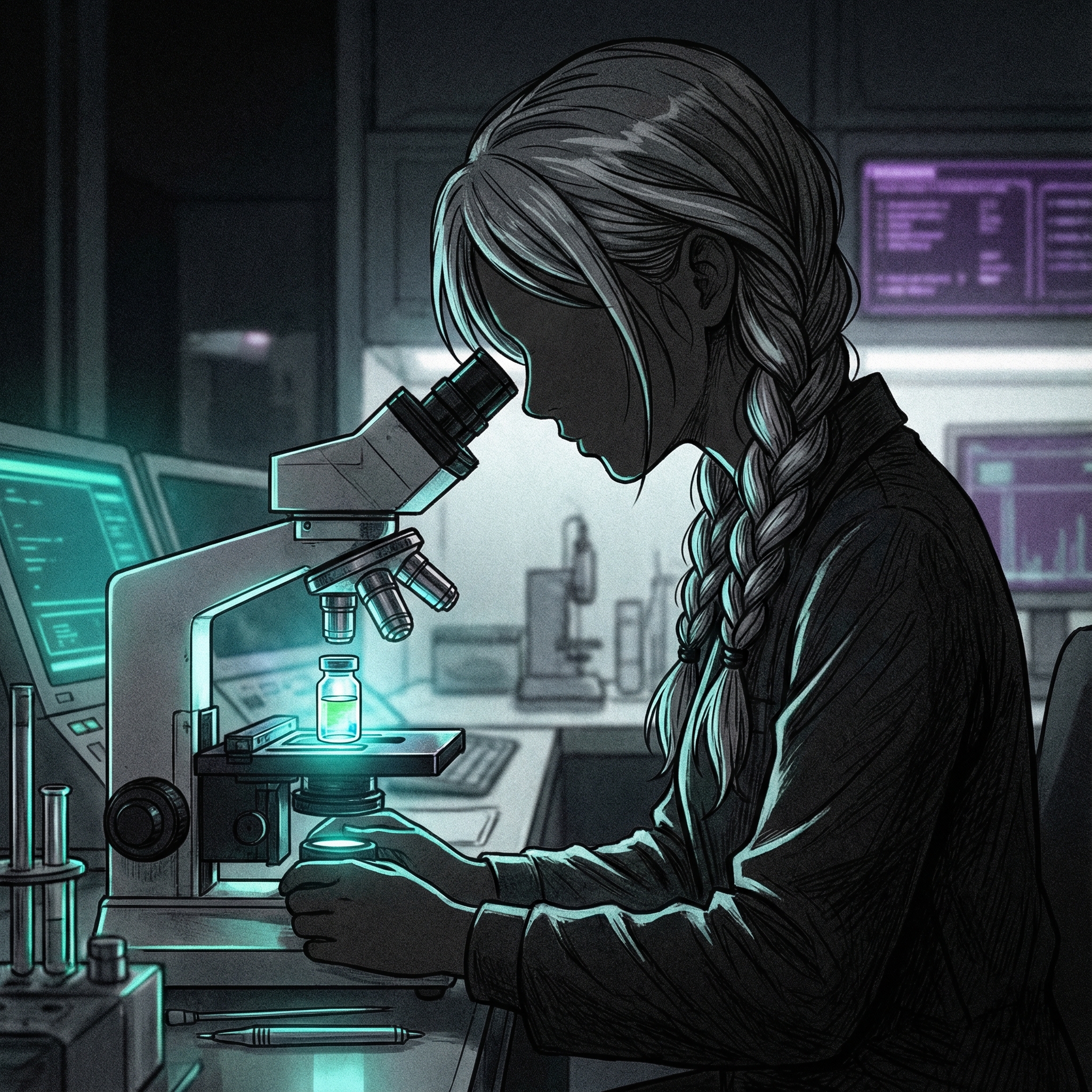
Dr. Elena Rodriguez spent six years creating monsters. Now she’s dedicated her life to destroying them.
Background
Elena’s path to Eden began, like many dark journeys, with good intentions. A graduate of Johns Hopkins with specializations in virology and epidemiology, she was recruited by Nexus Biotech with promises of cutting-edge research and unlimited funding.
The early work was legitimate—vaccine development, pathogen containment protocols, emergency response systems. Elena told herself she was making the world safer.
Then she saw the classified projects.
At Nexus
Elena’s transition from researcher to reluctant participant happened gradually. Each ethical compromise seemed small—adjusting research parameters, ignoring questions about military applications, pretending not to notice when subjects disappeared from official records.
By the time she understood the full scope of what Nexus was creating, she was too valuable to leave. And too afraid.
“They don’t let people walk away,” she told John Harrison. “Not people who know what I know. I had two choices: comply or disappear.”
She chose to comply. And hate herself for it.
The Breaking Point
Like Mark Watney, Elena reached a point where compliance became impossible. For her, it was the development of Stage 4 integration—the protocol that turned infected into coordinated hunters.
“That wasn’t medicine,” she said later. “That wasn’t even warfare. That was farming. They wanted to create a controllable plague, unleash it wherever they wanted, and harvest the chaos.”
Elena began documenting everything. Building evidence. Waiting for the moment when she could bring it all down.
Eden Resort provided that moment—though not in the way she expected.
The Outbreak
When containment failed, Elena was one of the few researchers who understood what was happening. While others panicked, she secured samples, gathered equipment, and retreated to the bunker she’d prepared for exactly this scenario.
Frank Harrison found her there, already working on a cure.
“You knew this would happen,” Frank accused her.
“I knew something would happen,” Elena replied. “I just didn’t know when. Or that I’d still be here when it did.”
Creating the Cure
Elena’s work on the antiviral was decades in the making. She’d been studying the virus’s weaknesses since she first learned what Nexus was building, identifying vulnerabilities that the developers had intentionally included as “failsafes.”
The breakthrough required fresh Stage 4 neural tissue—samples that could only be obtained from the overrun laboratory. Elena knew she couldn’t retrieve them alone.
Then the Harrisons arrived.
Current Status
Following the successful synthesis and deployment of the cure, Elena has become a crucial ally in the Harrison family’s campaign against the Architects. Her insider knowledge of Project Eden, combined with her scientific expertise, makes her invaluable.
She carries her guilt like a weight. Every success is tempered by the knowledge of what she helped create. Every life saved is measured against the lives lost.
“I can’t undo what I did,” she told Lisa Harrison. “But maybe I can balance the scales. Even if it takes the rest of my life.”
Personal Philosophy
Elena approaches the fight against the Architects with the same clinical precision she once applied to creating bioweapons. She believes in results over redemption, action over absolution.
“Guilt is a luxury,” she says. “The dead don’t care if I feel bad about what happened to them. They only care about what I do next.”
What she does next is work. Tirelessly. Methodically. Until every facility is destroyed and every Architect is exposed.
Research Notes
Elena keeps a personal journal alongside her scientific documentation. Most entries concern research progress and tactical planning.
One entry stands out:
“John asked me today if I thought I was a good person. I told him no. Good people don’t spend six years engineering plagues.
But he surprised me. ‘Good and evil aren’t who you are,’ he said. ‘They’re what you do. And what you’re doing now matters more than what you did before.’
I’m not sure I believe him. But I want to. Maybe that’s enough.
Maybe it has to be.”