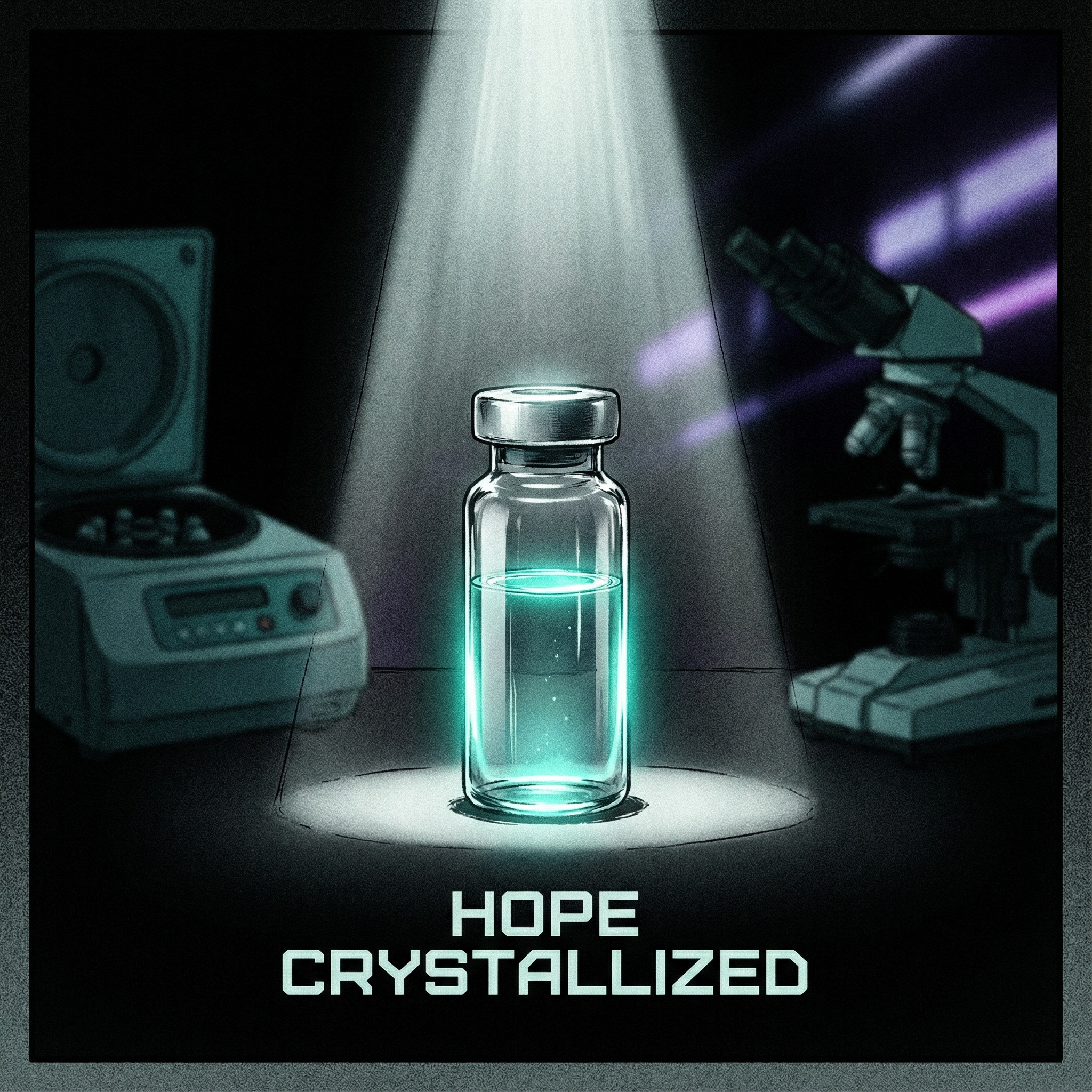
Classification
Official Designation: Eden Antiviral Compound (EAC-1)
Informal Name: “The Cure”
Development Time: 40 hours (post-specimen acquisition)
Primary Developer: Dr. Elena Rodriguez
Contributing Scientist: Dr. John Harrison
Development History
The cure for the Eden virus didn’t begin on the island. It began years earlier, in the same laboratories where the virus itself was created.
Elena Rodriguez had been studying the pathogen’s vulnerabilities since she first understood what Nexus Biotech was building. She knew that engineered viruses, unlike natural ones, have intentional weaknesses—failsafes built by their creators to protect themselves from their own work.
The Eden virus was no exception.
Mechanism of Action
The cure targets the synthetic binding sites in the virus’s fungal component. These sites were designed to allow Nexus scientists to terminate the infection in controlled subjects—a kill switch for their biological weapon.
By developing a compound that occupies these binding sites, Elena could prevent the fungal tissue from integrating with the host’s nervous system. For early-stage infections, this effectively reverses the transformation. The fungal compound breaks down, the viral load diminishes, and the host returns to normal.
For later-stage infections, the damage is too extensive. The neural pathways have been rewritten. There’s nothing left to save.
Production
The cure requires a specific compound extracted from Stage 4 neural tissue—the most advanced form of the infection. This created a terrible irony: to save people from becoming monsters, you need tissue from people who already have.
Retrieving those samples cost Frank Harrison and Diego Rodriguez their lives.
Efficacy
Clinical trials on early-stage patients showed remarkable results:
- Stage 1: 98% recovery rate
- Stage 2: 87% recovery rate (some residual effects)
- Stage 3: 12% recovery rate (significant neurological damage)
- Stage 4+: 0% recovery rate (termination remains only option)
The treatment window is narrow. Twelve hours from initial infection to maximum efficacy. After that, the neural integration progresses too far for reversal.
Distribution
Following the Harrisons’ escape from Eden, Elena coordinated with international health organizations to establish production facilities. The cure is now manufactured at three sites, with distribution networks covering major population centers.
The Architects know this. They’re adjusting their virus strains to circumvent the treatment.
The arms race continues.
Personal Cost
Creating the cure required sacrifice. John Harrison watched his uncle die so he could retrieve the samples. Diego Rodriguez gave his life to buy them time. Elena carries the weight of every patient she couldn’t save while she was still part of the system that created this horror.
“This cure exists because people died,” John said during the first successful treatment. “Every dose we give is bought with their blood. We don’t get to forget that.”
The Harrisons don’t forget. They remember every time they administer the treatment. Every life saved is a memorial to the lives lost.
Future Development
Elena continues to refine the cure, looking for ways to extend the treatment window and improve Stage 3 recovery rates. Her research notes suggest theoretical approaches that might even work on Stage 4 patients—though she admits these are “years away from practical application, if they’re possible at all.”
The goal isn’t just treatment anymore. It’s prevention.
If the Architects release their virus in population centers, the cure can save some people. But not everyone. Not fast enough.
The only real solution is to stop the Architects before they can act.
Research Notes
From Dr. Elena Rodriguez’s development journal:
“Day 37. First successful human trial. Patient recovered fully, no residual infection. I should feel triumph.
Instead, I feel the weight of everyone I couldn’t save. The ones who came before this breakthrough. The ones who died while I was still complicit in creating the very thing that killed them.
John tells me that’s survivor’s guilt. That it doesn’t help anyone. That the only thing that matters now is what we do next.
He’s right, of course. He usually is.
But I can’t help thinking about all the days before Day 37. All the patients who didn’t get a cure because it didn’t exist yet. All the futures erased by something I helped build.
The cure works. That’s what matters. The cure works, and every day it saves more people.
Some days, that’s enough.
Some days, it isn’t.”