Dom kept his promise.
Within three months of our meeting, the market was flooded with knockoff Echo devices. Cheap hardware manufactured overseas, running pirated versions of Marcus’s code, sold at a quarter of our prices through distribution networks that appeared overnight.
The knockoffs worked. Mostly. They installed memories with about seventy percent fidelity—good enough for casual users who didn’t know the difference. They were also unstable, prone to corruption, and manufactured without any of the safety protocols Marcus had built in.
The bleed cases we were seeing? They were nothing compared to what the knockoffs created.
I started hearing about it through the network. Users who’d bought cheap installations at pop-up shops, in parking lots, from guys selling out of their trunks. They weren’t just glitching—they were breaking. Whole personalities fragmenting under the weight of poorly integrated memories.
Some of them ended up in hospitals. Some ended up on the street, unable to distinguish the past from the present. Some just… stopped. Blanked out. Bodies walking around with nothing behind the eyes.
The street started calling them Blankers.
“He’s creating demand,” Marcus said, staring at the reports. “The knockoffs break people. Then he sells them upgrades to fix what his knockoffs broke. It’s a subscription model for human consciousness.”
“Can we compete?”
“Not on price. Not at scale.” Marcus pulled up a schematic. “Our devices cost more because they’re safe. His cost less because he doesn’t care if they’re safe. We can’t match that without compromising everything that makes our product work.”
“Then what do we do?”
Marcus looked at me. “We grow. Get big enough that people know the difference. Make the brand so strong that buyers understand what they’re paying for.”
That meant expansion. New markets. More technicians, more distribution points, more product lines. It meant becoming what Dom was, just with better intentions.
I told myself the intentions mattered. That the difference between us and him was that we cared about the people we served.
Miss Addie would have called that the first lie.
The God Market opened in April.
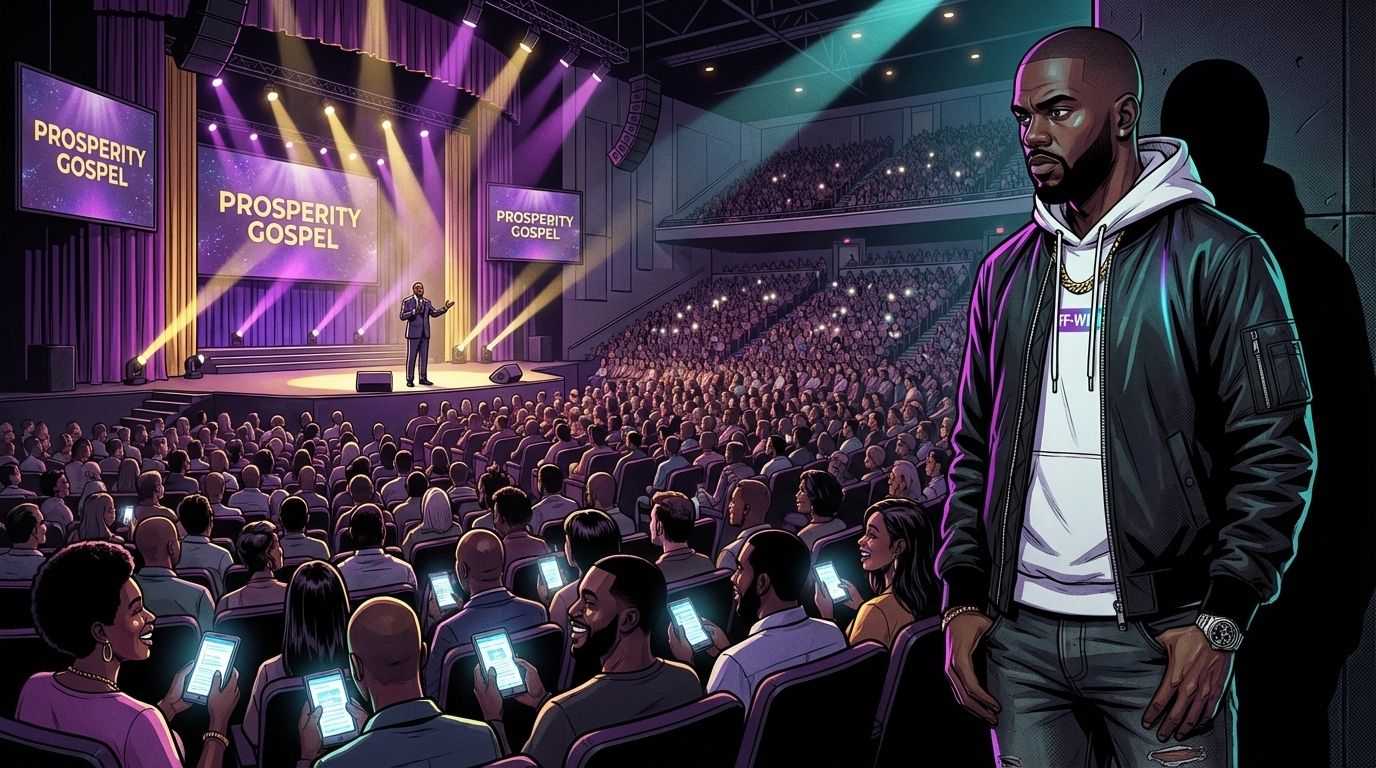
Dom had partnered with a network of megachurches—prosperity gospel operations that had been selling spiritual experiences long before the technology existed to deliver them. The pitch was elegant: “Spiritual Enhancement Packages” that let congregants experience direct connection with the divine.
For a tithe—always a tithe, never a fee—you could receive a memory of religious ecstasy. The certainty of faith. The feeling of God’s presence, warm and overwhelming, confirming that you were blessed, that your prosperity was divinely ordained.
The program was technically voluntary. But when your entire social network was in the congregation, when your business contacts all attended the same service, when your kids’ school friends were all part of the same community—what’s voluntary?
I went to see it for myself. A Sunday service at a megachurch off the 610, ten thousand seats in a building that looked more like a stadium than a sanctuary. The pastor was a smooth man in an expensive suit, preaching about the blessings available to those who believed.
Then the music changed. The lights dimmed. Ushers moved through the congregation with wireless devices that looked like hearing aids.
“For those who wish to experience the fullness of God’s love,” the pastor said, “our ministry offers a special opportunity.”
I watched three thousand people receive installations simultaneously. Their faces transformed—slack at first, then radiant with artificial joy. Some wept. Some raised their hands. Some spoke in tongues they’d never learned.
From the outside, it was indistinguishable from a genuine spiritual experience. Maybe it was indistinguishable from the inside too. Does the origin of ecstasy matter if the ecstasy feels real?
I didn’t know. I wasn’t sure I wanted to know.
What I knew was that Dom had figured out something I hadn’t: pain wasn’t the only universal experience. Hope was too. Faith was too. The desperate human need to believe that suffering had meaning.
He was selling salvation by the gigabyte. And business was booming.
We scaled up.
New distribution points in Third Ward, Sunnyside, Alief. A network of trained technicians who could handle installations without Marcus supervising every session. Product lines tailored to specific communities—quinceañera memories for the Hispanic neighborhoods, church homecoming packages for the Black Baptist circuits, ancestor visitation experiences for the Asian communities in Midtown.
The operation grew faster than I could track. Money was coming in. Reputation was building. The name “Memory Broker” started showing up in conversations I wasn’t part of.
And Sienna watched all of it with eyes that saw more than I wanted her to see.
“You’re becoming him,” she said one night. We were in bed, the apartment dark, neither of us sleeping.
“I’m not.”
“You’re scaling. Franchising. Building infrastructure.” She rolled over to face me. “Those are his words. From that first meeting. You’re doing exactly what he wanted.”
“The difference is why we’re doing it.”
“Is it? Or is that just what you tell yourself to keep going?”
I didn’t answer. Because the truth was, I couldn’t remember the last time I’d thought about why we’d started. The daily demands of the operation had consumed everything—the logistics, the personnel issues, the constant competition with Dom’s knockoffs.
I was running a business. The mission had become the excuse.
“I saw a woman today,” Sienna said. “On the corner of Wheeler and Emancipation. She was just standing there. Not moving. Eyes empty.”
“A Blanker?”
“I don’t know. Maybe. Or maybe she was just tired, just spaced out, just having a bad day.” Sienna’s voice was quiet. “But I looked at her and I wondered: did we do that? Some product that passed through our network, that we sold thinking we were helping?”
“We don’t make the knockoffs.”
“We created the market for them.”
She turned away. I stared at the ceiling.
The space between us was measured in words we couldn’t say.