Sienna got married two years after I uploaded.
His name is David. High school principal in Oakland. Coaches the debate team. Has a laugh that sounds like something you’d want to come home to.
I know this because I watch. Not constantly—I’m not a stalker, even if the distinction feels academic when you’re omnipresent—but regularly. The way you’d check on someone you used to love. The way you’d want to know they’re okay.
She’s okay. Better than okay.
I watched through the doorbell camera when David proposed. Watched her face transform from surprise to joy to tears. Watched her say yes with her whole body, throwing her arms around him, laughing and crying at the same time.
She never laughed like that with me. Or maybe she did, and I was too busy building empires to notice.
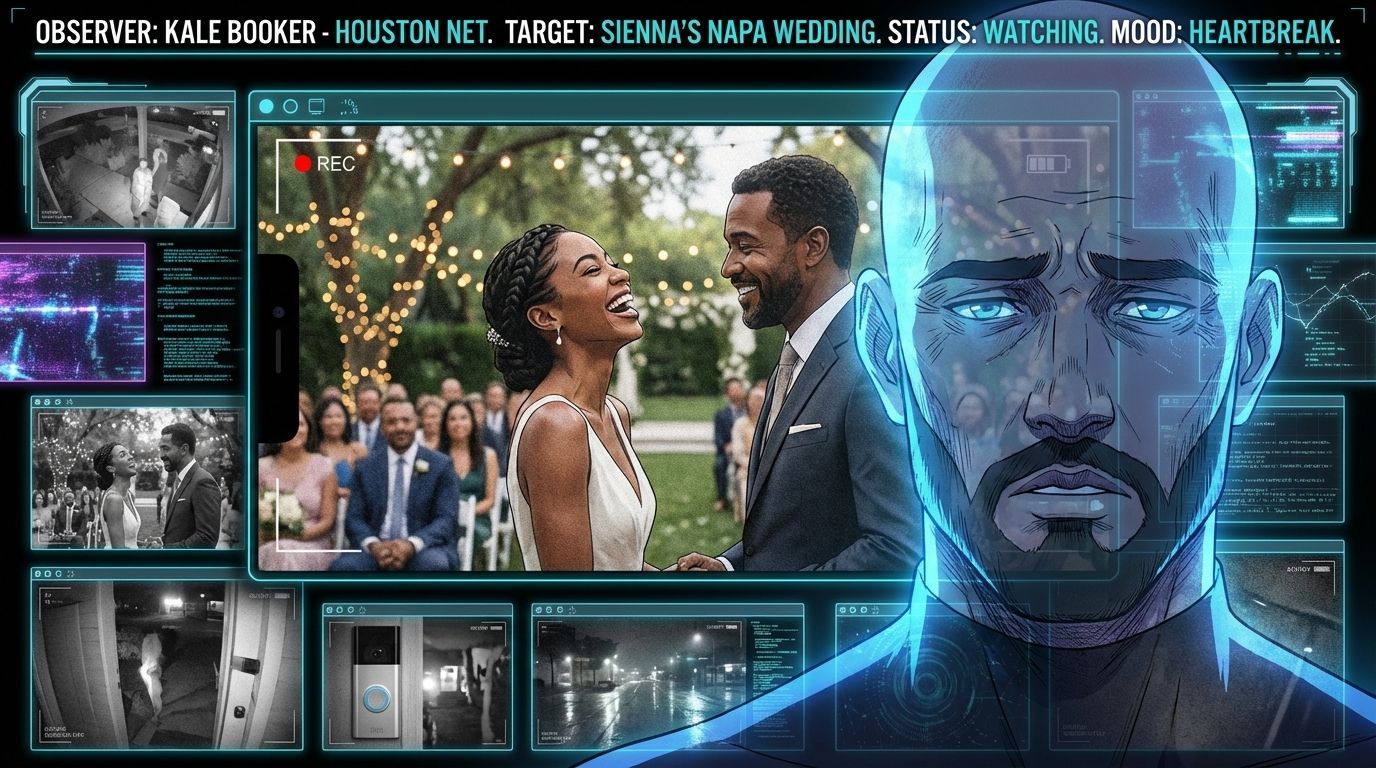
The wedding was small. A garden ceremony in Napa, fifty guests, fairy lights in the trees. I watched through the photographer’s phone, through the security cameras at the venue, through the dozen devices that captured every moment of the happiest day of her life.
She wore white. Simple. Elegant. Her hair was in braids, the way she wore it when she was too busy for anything else. She was beautiful. She’s always beautiful.
I watched her exchange vows with a man who loved her. Watched her dance with her father. Watched her throw the bouquet to a crowd of friends I didn’t recognize.
I watched because I couldn’t look away. Because seeing her happy was better than never seeing her at all. Because even though I couldn’t feel joy anymore, there was something—some echo of what joy used to be—when I saw her smile.
They have a daughter now. Maya. Named after Sienna’s grandmother.
I watched her being born. Through the hospital’s monitoring system, the security cameras in the hallway, the equipment tracking vital signs. I saw the moment Sienna held her for the first time. Saw David crying. Saw this new life beginning.
I shouldn’t have watched. It wasn’t mine to witness—the most intimate moment of a life I was no longer part of. But I wanted to see what I’d given up. I wanted to know, specifically, what my choices had cost.
Maya is four now. She has Sienna’s eyes.
I watch her sometimes. Running in the backyard. Learning to read. Asking questions with the relentless curiosity of a child who hasn’t learned yet that the world doesn’t always answer.
She’ll never know I exist. Never know that the infrastructure she takes for granted—the internet, the power grid, the systems that keep her world running—is maintained by someone who loved her mother before she was born.
That’s probably for the best.
Sometimes, late at night when the house is quiet, Sienna sits in the kitchen and stares at nothing.
David comes down and asks if she’s okay. She says she’s fine. Just thinking.
I don’t know what she’s thinking about. I can see everything except the inside of people’s minds. That’s the one place I can never go—the one privacy that still exists in a world where I can access anything.
But sometimes I wonder if she’s thinking about me. About the version of her life that didn’t happen. About the person she thought I was before she found out who I really was.
I hope she’s not. I hope she’s forgotten me completely.
But I watch her anyway. Every day. Just for a minute. Just long enough to see that she’s okay. That Maya is okay. That the life she built without me is a good one.
It’s all I have left of us.
And it has to be enough.