The Third Ward launch was the biggest event we’d ever done.
We’d partnered with community organizations to offer a mass installation—five hundred people simultaneously receiving memory packages of the neighborhood as it existed before the gentrification, before the Rice expansion, before the tech corridor transformed Black streets into startup real estate.
The event was part nostalgia, part protest. People who’d been displaced could return to a home that no longer existed. People who’d stayed could remember what they were fighting to preserve.
Sienna filmed everything. Miss Addie provided source memories. Marcus supervised the technical installation while I worked the crowd, shaking hands, accepting thanks, playing the role of the visionary who’d made this possible.
It was beautiful. Five hundred faces transported to a shared past. Tears of recognition. Laughter at forgotten details. The dense, physical presence of a community that had been scattered by economics and policy and progress.
I should have been proud. I was proud. But beneath the pride, something was wrong.
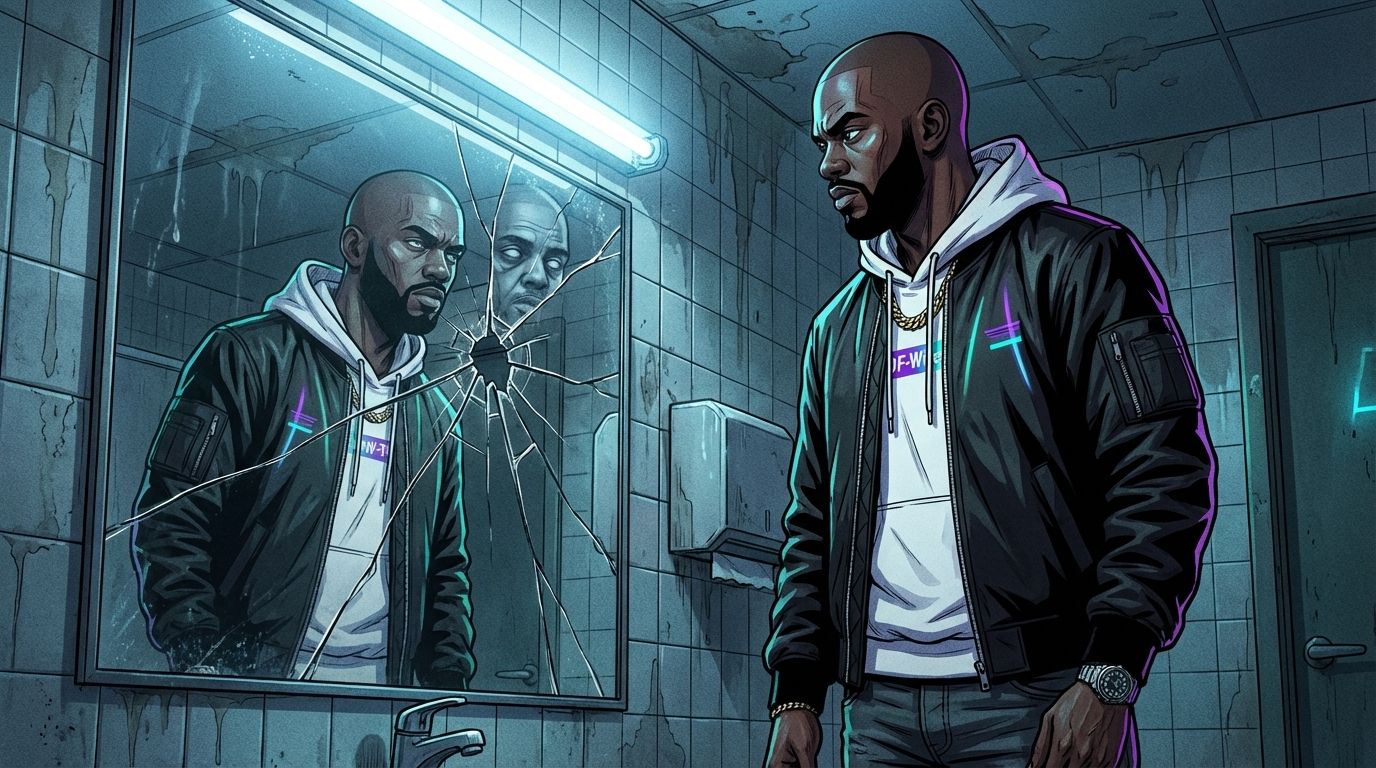
The bathroom of the community center was quiet. Fluorescent lights humming. Water stains on the ceiling tiles. I’d excused myself from the celebration—told Sienna I needed a minute.
I looked in the mirror.
The man looking back was successful. Wealthy, by Fifth Ward standards. Connected. Respected. Building something that mattered.
And tired. So tired.
The face in the mirror had my father’s eyes. The same eyes that had looked at me without recognition, polite and empty, after the state had taken his memory.
I thought about Jerome, standing frozen at our party. About Mrs. Patterson, forgetting her husband’s name. About the forty-seven pages of Marcus’s list, the cost of what we’d built.
I thought about Sienna’s question: Where does it stop?
It was supposed to stop here. Community events. Cultural preservation. Helping people hold onto what the world was trying to take.
But it hadn’t stopped. It had grown. And growth required resources, required expansion, required becoming something larger than the mission that started it.
I could walk away.
The thought arrived unbidden. I could walk away right now. The money was enough. The product was proven. I could hand the operation to Marcus, take Sienna somewhere far from Houston, live a quiet life with the memory of having mattered.
I stood there for ten minutes. Looking at myself. Trying to find the version of Kale Booker who could be satisfied.
He wasn’t there.
What I saw instead was my father. His face, confused, polite, empty. I felt the rage I’d been carrying since I was twenty-two years old, the day they turned him into a stranger.
Quiet wasn’t enough. Satisfaction wasn’t enough. I needed to be so big, so powerful, so undeniable that no one could ever do to me what they’d done to him.
I walked out of that bathroom and found Marcus.
“We’re expanding to Dallas,” I said. “Austin after that. Then San Antonio.”
Marcus looked at me. Something flickered in his eyes—concern, maybe, or recognition.
“Are you sure?”
“I’m sure.”
I went back to the celebration. Sienna found me, put her hand on my arm, asked if I was okay.
“Never better,” I said.
That was the night I made my choice. Not the jury tampering—that was just the consequence. The choice was earlier. The choice was in the mirror.
Every day since, I’ve wondered what would have happened if I’d made a different one.
I don’t wonder anymore. I know.
I’d be happy. And I’d be small. And eventually, someone would have erased me anyway.
This way, at least they had to work for it.