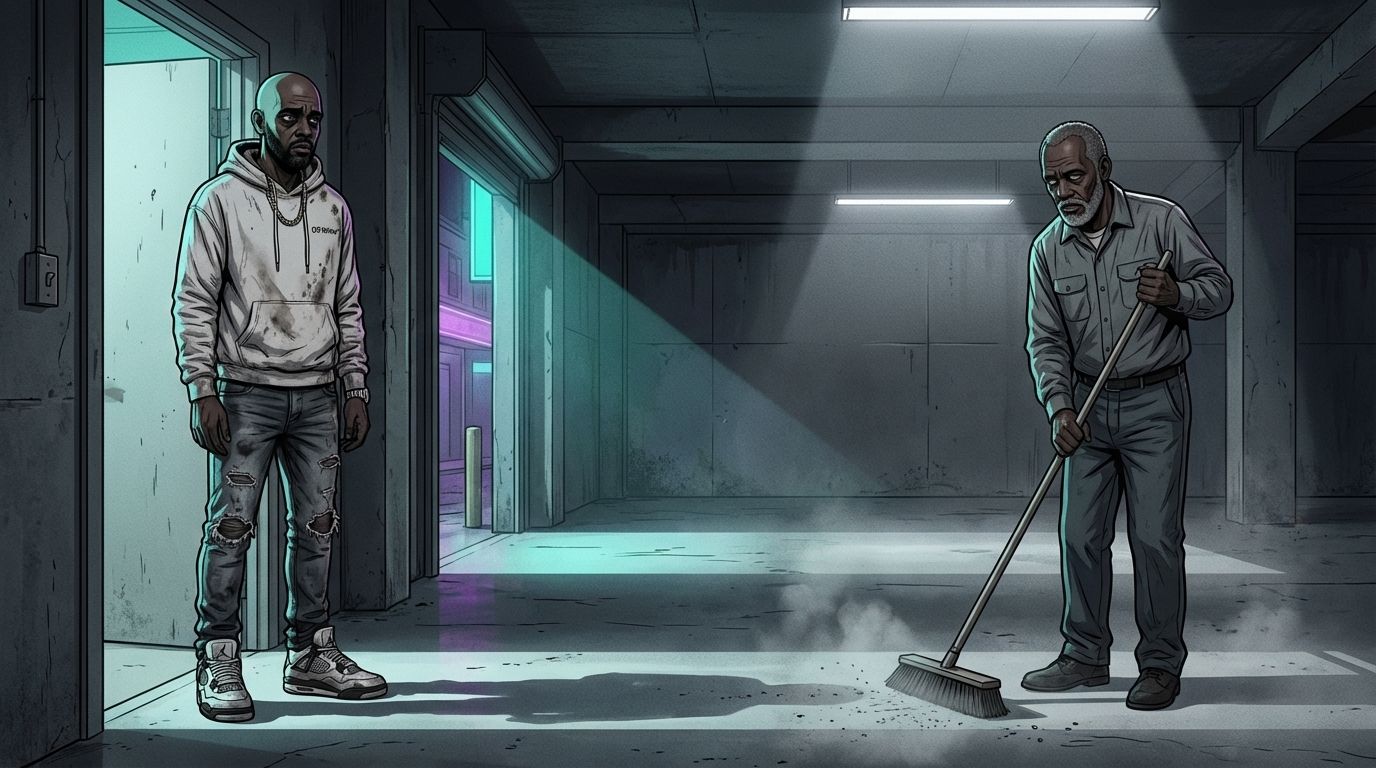
They came for Trap two days later.
I don’t know how they found him. Maybe they were watching me, saw him leave the bar, decided he was a loose end. Maybe he was targeted independently—the garage had been part of the operation, and Dom was cleaning house.
I wasn’t there when it happened. I was moving between safe houses, trying to find Marcus, trying to figure out what came next.
By the time I heard, it was already over.
The garage was empty. The slabs—every single one, including the purple Cadillac I’d been so proud of—were gone. Not impounded this time. Just gone.
And Trap was standing in the corner, sweeping the floor.
Same hands that had polished candy paint for thirty years. Same posture, that slab-rider lean that was as much his identity as his name. But his eyes—
I’d seen it in the photos. Seeing it in person was something else entirely.
“Trap.”
Nothing. No recognition. No flicker.
“Trap, it’s Kale.”
He looked at me. Through me. The way my father looked at me now. The polite confusion of a stranger deciding whether I needed something.
“Can I help you?” His voice was flat. Robotic. “The garage is closed.”
I wanted to scream. Wanted to grab him, shake him, force whatever was left of my friend to the surface. But I knew it wouldn’t work. The technology didn’t leave anything behind. It didn’t suppress or contain. It erased.
Trap was gone. The body remained.
“I’m sorry,” I said. To whoever was listening. To the universe. To the ghost of the man who’d warned me this would happen.
You’re building a museum. And you know what happens in museums?
Things die. They just die pretty.
I left him there. Sweeping the floor of an empty garage. The keeper of culture, reduced to maintenance.